Showing posts with label equipment. Show all posts

Wednesday, August 12, 2009

The X-Alps: The Inside Story

Judith Mole and I have just done the follow-up podcast on the race and it's aftermath. Have a listen to it on Judith Mole's paragliding podcast page.

The race was very tough but I was very happy to still be in the race at its end. The podcast covers a lot of topics, but if I've missed anything then email me at twpayne at gmail dot com and I'll answer your questions here.

Photo credit: ©Vitek Ludvik / Red Bull Photofiles

Thursday, July 16, 2009

Pre-race jitters

Of course there were going to be a few problems immediately before the race.

Several competitors have only just received their equipment. Harnesses and gliders are arriving in plastic bags and factories from around the world. It's a bit late for major modifications, but a few grams can be trimmed here and there. Vincent Sprungli was not happy with the glider sent to him, so he's decided to use his glider (a Boomerang 5) from 2007.

I managed to get things wrong today by not noticing a tangle in my lightweight risers on take off. The line lengths on paragliders need to be accurate to within a few millimetres but the tangle meant that one set on the right-hand side were shortened by 10cm. It didn't really fly very well in this configuration, I couldn't even fly in a straight line and so I ended up in the trees below launch. Thanks so much to Alex for organising getting me out and for Jurgen (one of the safety team) for getting me and the glider out unharmed. I need to replace the lines but that's the only damage. A simple modification to the risers will prevent this happening again.

This morning we had a briefing on the rules: the Race Organisation are going to be very strict on a number of rules this year, including airspace and the number of supporters.

Friday, July 10, 2009

The harness

Sup'air are kindly sponsoring me with an excellent harness. It's a lightweight version of the Altirando XP with a few minor modifications to save weight. The modifications are:

  • No comfort padding on the inside. The normal Altirando XP has some rather luxurious padding for your back, but Sup'air have removed this to save weight. The race harness keeps the full airbag back protection found in the standard version.

  • Lighter buckles. These are a lighter, simpler and a touch more fiddly than the normal light clip buckles. However, it saves a few grams!

  • Fewer pockets. Once again, just to save weight.


Sup'air have added a lightweight removable leg cover. This is streamlined and warm in the air, and can be removed and put in the van if there's a long walk ahead. In rucksack mode it's very comfortable to carry.

The reserve parachute is a Sup'air Xtralite Small which is a fully certified reserve parachute weighing less than 1kg. It packs in to a very neat combined front mount container which doubles as a cockpit for mounting my instruments in plain view.

These are the final pieces of gear, I'll get the scales out tonight to find out how much it all weighs.

Monday, July 6, 2009

Getting geeky

During the 2007 race I was glued to the internet, following the teams' progress through the Alps. Suddenly my phone rang: it was Aidan Toase: "Hi Tom, it's Aidan -- I'm trying to find a take off but I'm in the cloud and I can't see very far. Can you have a look on Google Earth and see if there's one near me?" Thanks to the live tracking I could find Aidan's exact position as he was on the phone, and was able to tell him that if he walked a few hundred metres north through a forest he'd come to a clear area where he could launch.

Technology has made an incredible difference to how we paraglide. Through the internet we have access to the latest detailed weather forecasts and up-to-the minute information from the sites. Using Google Earth and online databases like Paragliding Earth and XContest's incredible Skyways Map we have fingertip access to experience that would otherwise take years to acquire. Once in the air live tracking systems like Leonardo Live allow others to follow our progress in real time and are a great safety feature. Pilots who were flying ten years ago may remember analysing every word of the TV news forecast and somehow organising to go flying without using mobile phones. How archaic it seems now.

We'll have a whole host of technology on board to help us in the race. Here's a quick overview.

The 2009 live tracking, written by Harry Gergits, will be even better this year, with live updates every minute. Red Bull Mobile are supplying us with Sony Ericsson C702 which talk to our Brauniger Compeo+ altivario GPSs via Bluetooth. The Compeo+ collects a minute-by-minute log and packs eight track points in to an SMS which it sends every eight minutes.

Alex will use the live tracking to find me using a satellite car navigation system, and we'll both be watching the other team's movements to observe their route choices.

We'll also use the mobile phone to connect to the internet for the latest weather information and plan our moves on Google Maps and the Skyways Map. We'll make regular diary updates though MMS messages from the phone, which should be able to to text, photos, audio and video.

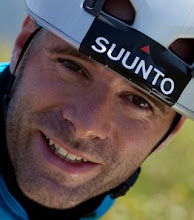
Suunto are supplying us with their new Suunto Core watch which includes an altimeter, compass and thermometer. All these features will be very useful for navigation in the mountains. For example, you can use the thermometer to measure the environmental lapse rate as you walk up to launch to get an idea of the atmospheric instability on the day.

I'll also be flying with the Leonardo Live tracking system created by Manolis Andreadakis which means that you'll be able to follow my flights in greater detail, it'll act as a backup tracklog in case I have problems with the official tracking devices, and will be further safety device.

Those of you who know me will know that I have a bit of a fetish for computers and have written quite a lot of software for paragliders. If you're an XC pilot then be sure to check out my XC planner and to analyse your flights with my Google Earth flight analyser (now integrated in to Leonardo). There are also a few geekier projects on my GitHub home page.

Saturday, July 4, 2009

Final stage of preparations, first glimpse of the race weather

Alex and I leave for Austria next weekend. In the meantime we're frantically getting together the remaining equipment. Last night we put a lighter set of risers on the glider (thanks Martin Orlik at Axis Para) and I test flew the glider with them this morning at the Saleve mountain near Geneva before the storms arrived and stopped play. The afternoon was spent putting stickers on the glider. There's a lot of them and the Red Bull logos are really fiddly. However, by the third sticker we were starting to get the hang of it and can now put them on quickly and cleanly.

On Wednesday I'll finally be able to collect the harness from Sup'air. I've chosen to use a third generation Altirando XP. Sup'air are producing a special version for the X-Alps which is a couple of hundred of grams lighter than the standard version. It's a really nice harness in the air, nicely aerodynamic with the removable leg cover and with some excellent back protection in the form of an airbag. Equally importantly, it reverses to become a very comfortable rucksack. I've asked for a couple of minor modifications to adapt it better to my rather skinny body shape. Stay tuned for a more detailed description of the X-Alps gear towards the end of the week.

Finally, the race start is just fourteen days away now. It's scarily close and the first long term forecasts have just been published. Two weeks is an eternity in weather forecasting and you can't really believe anything they say, but I can't resist peeking! The current forecast is that Austria will get quite a lot of rain the day before the race but race day itself will be dry with light winds at 1500m, which means that we'll be able to fly from the first turnpoint above Salzburg, the Gaisberg. The winds at altitude are moderately strong Westerlies, which could be a problem for making progress in the air. We're racing from East to West, against the prevailing winds and consequently the 'hard' way. This is the Red Bull X-Alps, after all...

Tuesday, June 30, 2009

Who's flying what?

All major paraglider manufacturers will be represented in this year's competition. There's a good mix of competition, serial and even DHV2 wings. Here's the quick low-down on who's flying what:

Gradient (6 pilots)
de Dorlodot (BEL), Skrabalek (CZE), Gebert (GER), Makkonen (FIN), Pascale (ITA1), Carter (RSA)

Axis (4 pilots)
Pennicuik (AUS), Payne (GBR2), Vrabec (SVK), Rejmanek (USA)

Gin (4 pilots)
Ogisawa (JPN1), Geijsen (NED), Jagla (POL), Muller (SUI2)

Advance (3 pilots)
Eichholzer (AUT1), Morillas (ESP), Maurer (SUI3)

Nova (2 pilots)
Fanderl (CAN), Matsubara (JPN2)

Ozone (2 pilots)
Wirtz (FRA2), Toase (GBR1)

U-Turn (2 pilots)
Sprungli (FRA1), Takats (HUN)

UP (2 pilots)
Coconea (ROM), Hofer (SUI1)

Mac (1 pilot)
Susa (SLO)

Niviuk (1 pilot)
Penso (VEN)

Skywalk (1 pilot)
Frotscher (ITA2)

Sol (1 pilot)
Gryaznov (RUS)

Swing (1 pilot)
Amon (AUT2)

It'll be very interesting to see how the different wings perform. The full-on competition wings like the Gin Boomerang 6 (flown by all the Gin pilots) and the Ozone Mantra R09 (flown by Wirtz) have the best performance in the air. However, in the normal version they have a lot of heavy internal structure and semi-rigid parts to help them maintain their shape at high speed. The X-Alps versions of these wings use fewer rigid parts to save weight, but this will compromise their handling and potentially their safety in the air. It might be that the friendlier competition wings like the Axis Mercury 09 (flown by Vrabec and Rejmanek) which are designed without rigid parts will fly better in their lightweight versions.

Pilots flying lightweight versions of certified wings like the Gradient Avax XC2 and the Axis Venus 2 will have less performance in the air but this may well be compensated for by the relative ease of piloting. We'll be improvising launch sites in the mountains and conditions won't always be perfect. Having a glider that launches easily - which is most definitely not a full-on competition wing with its structure removed - in extreme cases could make the difference between a passable launch and no flight at all.

Finally, competition wings are designed for maximum performance in normal paragliding competitions. These are short, intense flights lasting two to four hours and very different from the long multi-hour cross country flights we hope to do in the X-Alps. Competition wings are extremely demanding and tiring to fly. As fatigue sets in during the race only the very best pilots, like Hofer, Eichholzer and Maurer will have the ingrained reactions to continue to pilot them at 100%. Personally, I know that I will fly better for longer and be safer on my Venus 2.

Sunday, May 17, 2009

Wing arrives, Swiss League Cup

My X-Alps wing arrived on Friday! Thank you Axis UK! She's a beauty: 6.3:1 flat aspect ratio and racing trim giving her accessible comp wing performance and weighing just 4.8kg.

No simple top-to-bottom to get to know her, instead I took her to Frutigen near Interlaken in Switzerland for a round of the Swiss League Cup. For me it was an opportunity to discover a new flying area, get to know the wing, try out the X-Bus and meet a few of the big names in Swiss paragliding.

Saturday, day 1. Conditions were expected to be tricky and indeed they were! Although the airmass was unstable, rising atmospheric pressure restricted their upward movement. The result was small, weak, snotty thermals that seemed to form randomly and then peter out after a few turns. You'd occasionally hit a 2m/s thermal, but most of your time was spent grovelling over the trees in 0.2m/s. The Task Committee set a 49km task around the local area. Most of the field, including me, bombed out at around 20km, simply running out of options at the third turnpoint, but a few pilots persevered. PWC Champion Anja Kroll won the day, getting to goal in 3h20m and 35 minutes ahead of the only other pilot to complete the course.

I was really happy with the wing. I was flying in my normal cocoon harness which put me 5kg over the top of the weight range and yet I was still able to climb well. The air was turbulent behind the spurs in the lee of the valley wind and yet on a day when two wings ended up in the trees I had nothing more than a tip collapse.

On Saturday night I got to test the X-Bus, my first night in the support vehicle. It's brilliant! Comfortable, plenty of space to stand up and cook inside, light, heating, music, and a warm night spent in my down sleeping bag. It's a home away from home.

Sunday was forecast to be marginal: sunny in the morning but with Foehn winds in the Valais and moderately strong SW'ly winds at altitude. Fellow X-Alps competitor Chrigel Maurer was here today (he lives just down the road) and I was eager to find out more about his preparations. He's designed his own wing and sewn his own harness: the combination is very compact and weighs only 10kg. As we arrived a take off the race committee realised that with the strong winds it wasn't going to be taskable and made a quick and correct decision to can the day so we could get a short free flight before conditions got too bad.

Many launched quickly (although a few decided to take the bus down) and those who did fly were rewarded with a stunningly beautiful flight. The weak thermals of yesterday had been replaced with solid two and three metre per second climbs. I took one to over three thousand metres and with stunning views in all directions, including the lakes of Interlaken and the unmistakeable 4000m trio of the Eiger, Monch and Jungfrau peaks, one of the turnpoints in the 2007 race: see the photo at the top of the post.

The forecast was spot on, however, and with a Foehn wall visible tumbling over the cols between the peaks, a brisk 30km/h wind at 3000m, lenticular clouds forming, and a forecast of storms in the afternoon it wasn't a day to hang around so I spiralled down to land back at base.

It was a real pleasure to meet Anja Kroll, Joerg Ewald, and Swiss paragliding guru Martin Scheel. The organisation by the local school Cloud 7 paragliding was excellent, and thanks to all of the pilots who made me feel so welcome. While I was walking back on Saturday a car full of pilots spontaneously stopped for me and I had to explain that, in fact, I didn't want a lift and actually wanted to walk back...

Update: Martin Scheel's beautiful photos of the event are now online at his site www.azoom.ch.

Wednesday, May 13, 2009

Vehicule aquired!

I've finally found a camper van for the race. Provisionally named the "X-Bus", she's a 1992 Ford Transit Nugget Westfalia. Four seats, four comfortable sleeping places, and enough room inside to cook in bad weather. The engine (a 2.5 litre diesel) and the bodywork are both in good nick. Will do the job, basically.

Wednesday, May 6, 2009

First photos of the wing

Axis have sent me the first photos of my X-Alps wings. All being well I should receive her next week.

Saturday, May 2, 2009

Preparations update

Work's been really hectic over the last month so I've had very little time to update the blog. Here's a quick summary of what's been happening:
  • Red Bull have announced the final route, including the details of the turnpoint cylinders. I've made a Google Earth file of the route to help my route planning which you can download from here. The start is at 11:30am in the Mozartplatz in the centre of Salzburg on 19 July and Red Bull estimate that we'll be taking off from the local mountain, the Gaisberg, at about 1pm. After having run up it, of course!
  • The Axis Mountain Masterclass was a great success: three days, six sites and nine hours airtime in everything from snotty thermals below an inversion to screaming 6m/s climbs to magic evening restitution soaring to gentle XC conditions. Congratulations to our Axis "Mountain Master" Adam Stanfield and our two Axis "Mountain Stars" Colin Hawke and H.H. Tsai.
  • XC season is here and I've been out enjoying the feisty spring conditions in Annecy and St Hilare. The flying is currently best in the Pre-Alps, but come the Summer and the time of the race it's likely to be quite stable and inverted in the Pre-Alps so the best flying route will follow the high mountains. The photo at the top of this post was taken during a great XC day in Annecy with my friends Damien, Pascal and Esa.
  • Axis have finished building my glider and it's just waiting for its test flight. I should have it next week. During the Masterclass I got the opportunity to fly an Venus 2 RX like I'll be using in the race, albeit with normal materials, and it's brilliant: solid, fast, and despite being over the weight range it still climbs really well. Compared to a competition wing it's much easier to handle but still has excellent performance. Given that I'll be flying tired this is big advantage.
  • Pal Takats (HUN) and I are interviewed in the latest issue of Dragonfly magazine. You can read the magazine here.
  • I've found a camper van and it's just going through its checks. All being well I'll have it on the road in a couple of weeks. It's a Ford Transit Nugget Westfalia with a 2.5l diesel engine and 130,000km on the clock.
  • Finding a harness is proving to be problematic, but there are potentially good options from both Sup'air and Woody Valley. There are numerous comfortable harnesses, several light harnesses, a few reversible harness/backpack combinations, but not very many that are all of the above.
That's it for now, the good news is that work (real life) should be less demanding this month so normal blogging service should resume.

Monday, March 16, 2009

Axis factory report

So I recently visited the Axis Paragliders in Brno in the Czech Republic. Brno is the Czech Republic's second largest city and has been home to Axis since the company was founded in 1990. They have recently opened a second factory twenty kilometres from Brno and manufacture some gliders in Sri Lanka.

The focus of my visit was to talk to Axis's designer František Pavoloušek about the design and construction of my glider for the X-Alps. However, the visit turned out to be much more than that. It was fascinating to learn so much about the gliders and get an insight in to the full process of design, testing and construction that results in a modern high-performance paraglider. Every detail is carefully considered: materials, profiles, processes and finish.

Axis have been using their own profiles since the beginning. Compared to other manufacturers', they are relatively thick and efficient. This means that Axis wings, for the same pilot weight, are comparatively small. Consequently the wings are solid, fast, agile and collapse resistant. For me in the X-Alps this means I'll get great performance from a small (and consequently light) wing.

Safety is a primary concern of the design team. This evident throughout the range, even in the company's flagship competition wing, the Mercury. It isn't a question of getting the hottest glider possible through the tests, but instead paying attention to safety characteristics beyond what the certification measures. For example, the profile and trimming is carefully designed to create a glider that wants to fly and does not remain in deep stall. For pilots, this means that if we're flying slowly e.g. to top land on a UK ridge or squeeze in to a small landing field then if the glider starts to stall then when we raise our hands the glider immediately starts flying forward again. Gliders without this characteristic would dump you on your back.

The design team are hard at work on a new tandem and developing the Mercury.

As for my X-Alps glider, well the specification looks like this:
  • Manufacturer: Axis Paragliders
  • Model: Venus II XR
  • Lines: Unsheathed
  • Colour: Fire
  • Upper surface: 36g/m² Skytex
  • Lower surface: 27g/m² Skytex
  • Risers: Custom ultralight
Without a doubt, she's the perfect X-Alps glider for me and I can't wait to fly her!

Wednesday, March 11, 2009

Axis Factory

I'm in Brno in the Czech Republic at the moment, chatting to Axis Paragliders about the details of my wing for the event. It's great to meet the team in person and it's fascinating to learn about all the details that go into making a top quality paraglider. Axis' designer, František Pavloušek has many excellent ideas for how to make the wing even lighter. I'll post a full report when I get back to Geneva.

The weather is looking very good for XC in the French Alps this Saturday. I can't wait to get out on my Axis Mercury!